
T h e A u s t n e s W a t e r f a l l
Z o n e 1

Austnes Waterfall is the signature water at Austnes. This is where the Verdal River gathers power over rock, bridge and broken current before salmon settle into the fishable water below.
The aerial view makes the zone easy to understand: heavy white water at the falls, softer lanes below, and the southern bank with shelter and camp close to the river. Fish the legal water with patience, because the first fifty metres downstream from the waterfall are closed to fishing.
T h e m a g i c l i e s i n h o w t h e d a y b e g i n s , h o w i t e n d s , a n d i n t h e m e m o r i e s m a d e a l o n g t h e w a y .
xxxxxxxxxxxx
Austnes Experience
T h e C h a r a c t e r o f t h e B e a t
Zone 1 is the most famous part of the Verdal River.
The centre of the beat is Austnes Waterfall, a place with rare salmon-fishing history and real big fish potential.
This is where the river rises, tightens and creates one of the most important natural stopping points for salmon moving upstream.
For the angler, that makes Zone 1 different from ordinary river water.
The salmon do not pass this place without reacting to it.
They meet heavier current, broken water, oxygen, pressure and the waterfall itself.
Many fish pause below the falls before they continue their journey.
That is the reason Austnes Waterfall has held its reputation for generations.
The first foreign fishermen came here with long bamboo rods, often five to six metres in length, and without reels.
They came because the waterfall gathered fish.
The same principle still defines Zone 1 today.
This is a beat for anglers who like strong water, defined holding lies and the possibility of meeting large salmon in a place where the river naturally concentrates fish.
W h y S a l m o n H o l d H e r e
Large salmon hold in Zone 1 because the waterfall forces them to slow down.
When salmon move upstream and meet Austnes Waterfall, they often need to rest before attempting the next stage of the river.
They look for water where they stay close to the main current, but without wasting too much energy.
That is the key to understanding this beat.
The best salmon lies are usually not in the hardest water itself.
They are found along the edges of pressure, where fast water meets softer current.
In Zone 1, you should look for:
deeper pockets below the main pressure from the falls
soft seams along the faster current
slower edges close to stronger water
calmer lanes where salmon rest before moving again
holding water behind stones and river structure
the neck and tail of the smaller pool in the southern course when water levels are right
This is classic waterfall salmon water.
The fish are there for a reason.
Your job is to understand where they save energy, where they feel secure, and where they are most likely to take.
B e s t T i m e t o F i s h
Zone 1 is especially interesting from the opening of the season.
When fishing opens on 1 June, salmon often gather below Austnes Waterfall on their way upstream.
These fish are fresh, strong and often large.
They have not yet spread far through the river system, and the waterfall makes them pause.
That creates one of the most intense fishing situations in the Verdal River.
Not long ago, 26 salmon were landed here on the first day of fishing.
All were between 7 and 15 kilos.
That tells an experienced salmon angler what this beat offers when the timing is right.
Zone 1 also fishes well later in the season, especially after periods of low water followed by rising water.
When the river lifts, salmon begin to move again.
Fresh fish push upstream.
Fish already in the system shift position.
Old holding lies become active.
The best window often comes when the river has risen, started to settle and still has enough colour and life to move fish.
B e s t W a t e r C o n d i t i o n s
Zone 1 becomes especially interesting at medium water flow and higher.
At this level, the river gains structure.
The current becomes more defined, the seams become clearer, and the water below the falls gives salmon more places to hold.
At medium flow or more, the river divides into two courses.
This gives the angler more options and more angles.
The southern course forms a smaller pool, and this water deserves careful attention.
This pool is not secondary water.
In the right flow, it gives large salmon exactly what they often prefer:
softer water close to pressure
depth near moving current
a resting place before the next push upstream
a controlled lane where the fish feels secure
After rain, Zone 1 often becomes especially promising.
A lift in water creates movement.
It changes the lies, freshens the river and brings salmon back into taking positions.
In lower water, the beat becomes more demanding.
The fish often grow more careful.
The angler should fish lighter, quieter and with more precision.
In low and clear conditions, observation matters more than force.
H o w t o F i s h t h e B e a t
Do not rush Zone 1.
This is water you should read before you fish.
Start by standing back from the river.
Watch the flow below the waterfall.
Look for seams, softer edges, deeper lanes and changes in speed.
The best lie is often where the current changes character.
Do not begin with the longest cast.
Large salmon often stand closer than expected, especially when the river carries colour or volume.
Fish the near water first.
Then work outward.
A strong approach is:
stand back from the bank
watch the water before casting
fish the close edge first
find the main seam
cover the softer water beside the pressure
fish the deeper pockets
change angle before changing place
move slowly and systematically
For fly fishing, angle and speed matter more than distance.
The fly should swim across the current with control.
It should not race through the taking water.
In stronger water, the fly needs enough depth and presence.
In lower water, it should fish lighter and more quietly.
For spinning, cover the water slowly.
Vary depth before moving on.
A large salmon holding below a waterfall will not always move far.
The lure needs to pass at the right speed, at the right depth and through the right lane.
Avoid unnecessary wading.
The close water might hold fish.
Fish it before you step into it.
K e y H o l d i n g W a t e r
The key holding water in Zone 1 lies below the pressure from Austnes Waterfall. Salmon pause here before they try to move upstream, and the best lies are usually where heavy current softens into fishable lanes.
Pay special attention to the seams below the waterfall, the deeper pockets below the hard current, the softer edges along the main flow and the calmer lanes beside stronger water.
The first 50 metres downstream from the waterfall are closed to fishing. Fish the legal water with care, and treat every cast as if a fresh salmon is already lying there.
H o w t o F i s h t h e B e a t
Do not rush Zone 1.
This is water you should read before you fish.
Start by standing back from the river.
Watch the flow below the waterfall.
Look for seams, softer edges, deeper lanes and changes in speed.
The best lie is often where the current changes character.
Do not begin with the longest cast.
Large salmon often stand closer than expected, especially when the river carries colour or volume.
Fish the near water first.
Then work outward.
A strong approach is:
stand back from the bank
watch the water before casting
fish the close edge first
find the main seam
cover the softer water beside the pressure
fish the deeper pockets
change angle before changing place
move slowly and systematically
For fly fishing, angle and speed matter more than distance.
The fly should swim across the current with control.
It should not race through the taking water.
In stronger water, the fly needs enough depth and presence.
In lower water, it should fish lighter and more quietly.
For spinning, cover the water slowly.
Vary depth before moving on.
A large salmon holding below a waterfall will not always move far.
The lure needs to pass at the right speed, at the right depth and through the right lane.
Avoid unnecessary wading.
The close water might hold fish.
Fish it before you step into it.
L o c a l F e a t u r e s a n d H i s t o r y
Austnes Waterfall carries more fame than any other place in the Verdal River.
It is part of the river’s salmon-fishing identity.
The first foreign anglers came here with long bamboo rods and no reels, drawn by the same thing anglers still seek today: salmon gathered by powerful water.
At medium flow or higher, the southern course becomes an important part of the beat.
Here you find Tora Cliff, named after the Swedish angler Tora Sjødin.
She was known as a skilled fisherwoman, and this cliff was her favourite place.
That gives the place character.
Tora Cliff is not only a name.
It marks a part of the river where patience, observation and good fishing sense matter.
From this position, the angler reads the southern course, the smaller pool and the soft holding water close to stronger current.
Fish short before fishing long.
Look before you cast.
Let the river show you where the salmon should be.
B i g S a l m o n P o t e n t i a l
Zone 1 has real big salmon potential.
The reason is simple.
Austnes Waterfall gathers fish.
Large salmon moving upstream meet a natural obstacle here.
They pause, recover and hold in the water below the falls.
That gives the angler a rare chance to meet fish of serious size in concentrated water.
The opening-day history proves the potential.
A day with 26 salmon between 7 and 15 kilos tells you what this water represents when river, timing and fish come together.
This is the kind of beat where one cast changes the season.
It rewards patience, timing and proper river reading.
It does not reward random fishing.
The angler who understands current seams, depth, water level and salmon behaviour has the best chance here.
F i s h i n g R u l e s
The first 50 metres downstream from Austnes Waterfall are closed to fishing.
This rule must be respected.
The closed section protects the most sensitive water directly below the falls.
The open water below it still offers serious fishing when approached correctly.
Fish the legal water with care, patience and discipline.
Zone 1 rewards the angler who understands why salmon stop below a waterfall, where they hold, and how water level changes their behaviour.
Read the river first.
Then fish it properly.
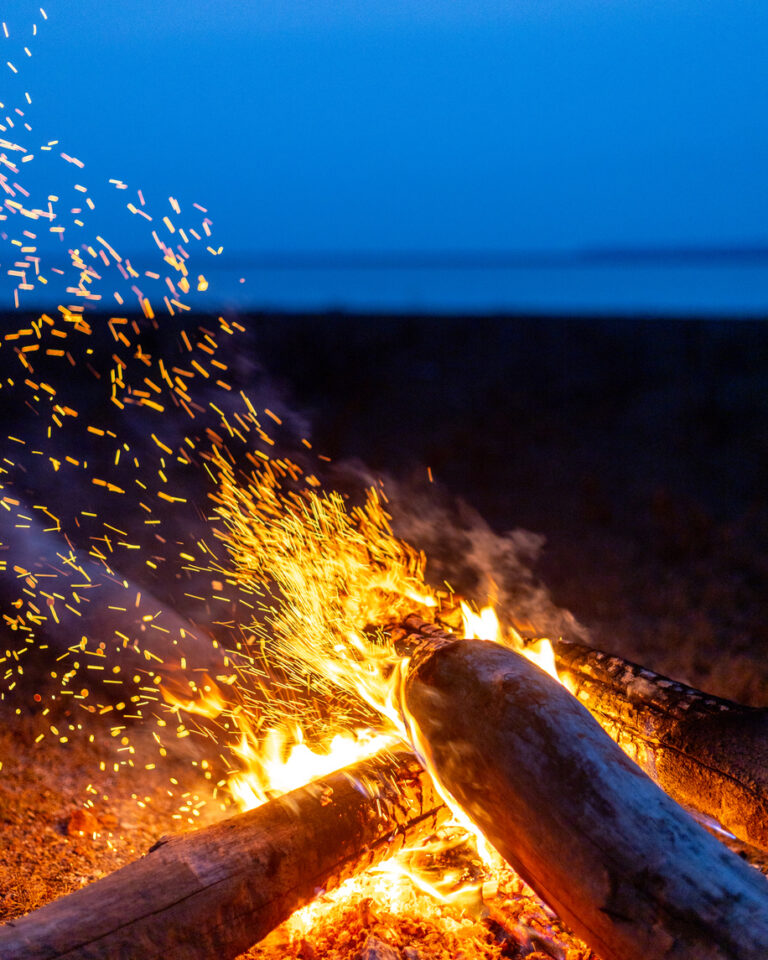
A c c e s s , S h e l t e r a n d P r a c t i c a l C o m f o r t
On the southern bank, by the camping ground, there are places to sit and watch the river.
There is also a traditional Norwegian gapahuk, an open riverside shelter.
This gives anglers, friends and family a natural place to rest between sessions.
For a salmon angler, this matters.
Zone 1 is water worth watching.
From the bank, you study the flow, discuss the day’s fishing and plan the next pass.
The shelter gives the beat a social rhythm without taking focus away from the fishing.
This is a place for more than casting.
You watch the river rise or drop.
You notice colour changes.
You see where the current opens.
You decide where the next chance might come.
At Zone 1, good fishing often starts before the next cast.